Parts of a Roof: What Every Homeowner Should Know
Learn the key parts of a roof — decking, underlayment, shingles, flashing, and more — so you can talk to contractors and adjust your insurance claim.
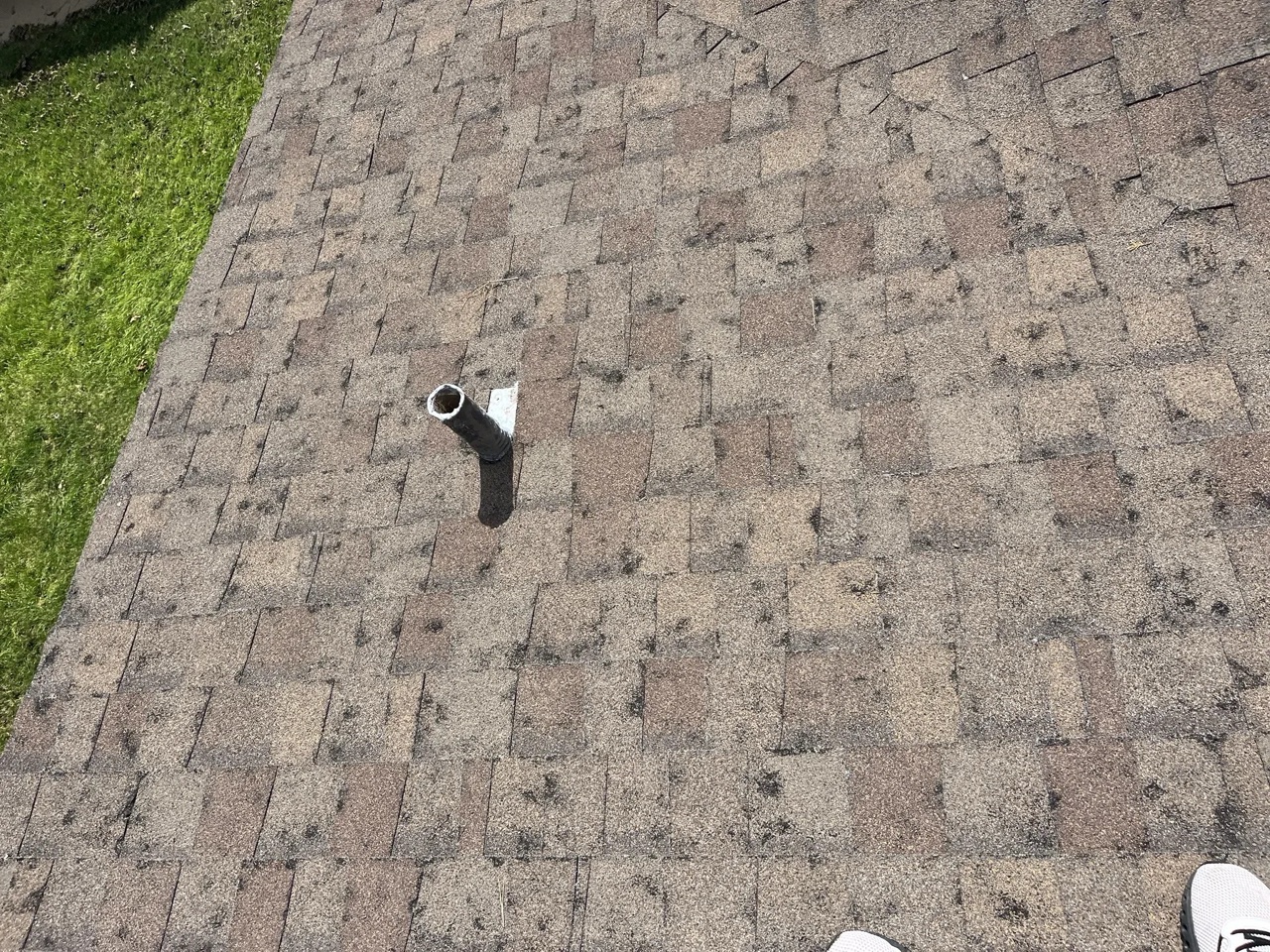
A roof has many layers and components working together, and understanding the basic parts of a roof helps you have an informed conversation with a contractor, read an insurance adjuster's scope report, and catch when something is missing from a repair estimate. Here's a plain-English breakdown of every major roof component and what it does.
The Structural Foundation: Rafters and Decking
The skeleton of your roof starts with rafters — the angled wooden beams that form the triangular framework and give the roof its slope. Rafters support everything above them.
Laid over the rafters is the roof decking (also called sheathing). Most homes built after the 1980s use 7/16-inch or 1/2-inch OSB (oriented strand board); older homes often have plank decking — individual boards nailed side by side. The decking is the solid surface that every other layer attaches to. If it's rotted, soft, or sagging, no amount of new shingles will fix the problem — the decking has to be replaced first.
Contractors inspect decking during a tear-off. In the Texas Panhandle, where Amarillo averages 8–12 hailstorms per year and has logged 131 hail days since 2000, repeated impact cycles can accelerate decking wear if old shingles were left in place during previous re-roofs. This is why a full tear-off (not a lay-over) is standard practice for any legitimate roof replacement in Amarillo.
Underlayment: The Water Barrier Nobody Sees
Underlayment is a felt or synthetic membrane rolled out over the decking before shingles go on. It's your second line of defense if water ever gets under a shingle.
There are two main types:
- Felt underlayment (15 lb or 30 lb asphalt-saturated felt) — the traditional option, less expensive, adequate for most Texas Panhandle climates
- Synthetic underlayment (woven polypropylene) — lighter, stronger, more tear-resistant during installation, better moisture resistance; now the industry standard on most re-roofs
High-wind areas should also use ice-and-water shield — a self-adhering membrane applied at the eaves and in valleys. Despite the name, it's valuable in Amarillo even without an ice problem: when wind-driven rain gets under shingles, ice-and-water shield prevents it from reaching the decking.
The Shingle Surface
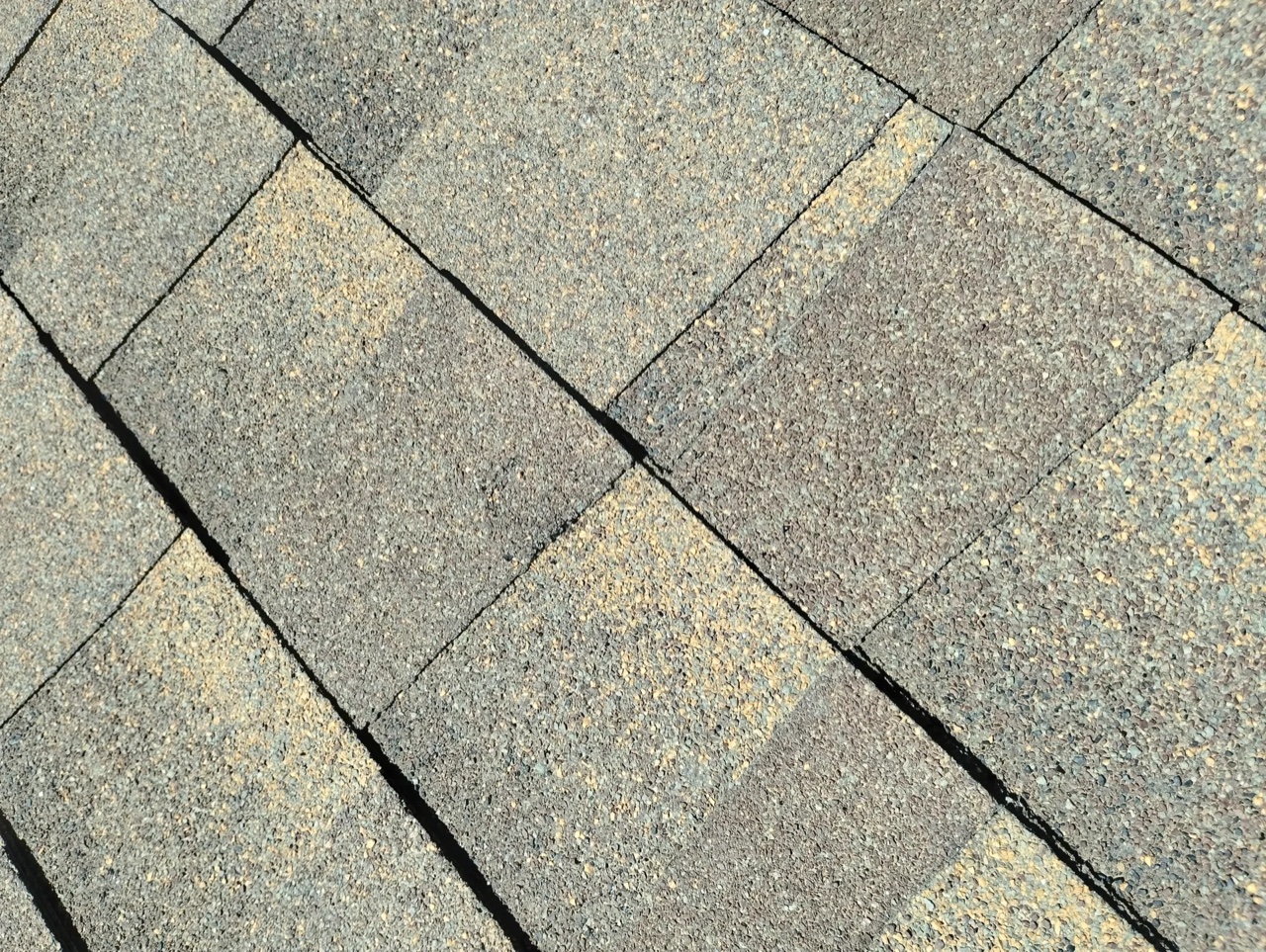
Shingles are what most homeowners picture when they think of a roof. In the Texas Panhandle, the dominant choice is architectural asphalt shingles (also called dimensional or laminated shingles) because they perform well in high-wind and hail conditions and carry better Class 4 impact ratings than older 3-tab shingles.
Each shingle has two functional parts: a fiberglass mat base for structural integrity, and a granule coating on top that reflects UV, sheds water, and takes the direct impact of hail. When hail strips those granules, the underlying asphalt is exposed to the sun and degrades quickly — which is why granule loss is the primary sign adjusters look for after a storm.
Shingles are installed in overlapping courses from the eave up to the ridge, so water always flows downhill over the next course rather than under it.
Flashing: Sealing Every Seam
Flashing is thin metal — typically galvanized steel or aluminum — installed anywhere the roof has a penetration or a change in angle that shingles alone can't waterproof. These are the spots most likely to leak if not done right:
- Valley flashing — installed in the V-shaped channel where two roof slopes meet; water funnels through valleys at high volume
- Step flashing — L-shaped pieces woven in with shingles along vertical walls (dormers, chimneys)
- Counter flashing — embedded into mortar joints on chimneys, overlapping the step flashing below
- Drip edge — runs along eaves and rakes (edges), directing water off the roof and away from the fascia
Poorly installed flashing is one of the most common causes of roof leaks — and one of the most common items that adjusters leave off a storm damage scope. Hail can dent metal flashing enough to break the seal, and a competent inspector will check every piece.
Pipe Boots and Penetration Seals
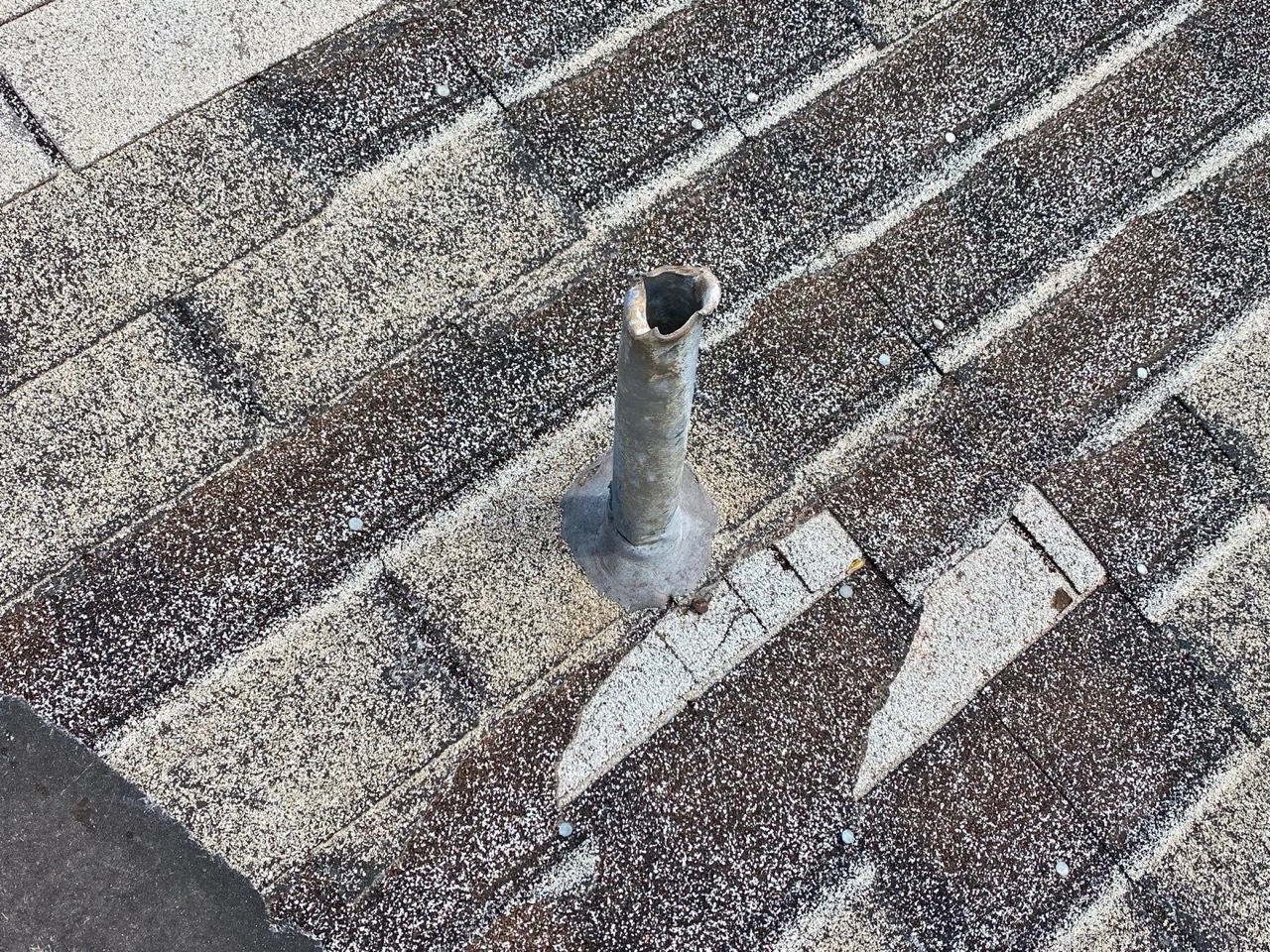
Every plumbing vent stack that exits through your roof is sealed with a pipe boot — a neoprene or EPDM rubber collar that forms a watertight fit around the pipe. Pipe boots are one of the most overlooked items on a roof: the rubber cracks with age and UV exposure, and a cracked boot creates a direct water path into the attic.
On a full replacement, pipe boots should always be replaced with new ones. On an insurance claim, verify that the scope includes pipe boot replacement if they were damaged or are older than 10 years.
Ridge, Hip, and Rake Components
Ridge cap shingles run along the peak of the roof — the horizontal line where the two slopes meet. They're thicker and pre-bent to conform to the angle. Because the ridge is the highest point, it catches wind uplift on both sides simultaneously; a cheap or poorly nailed ridge cap is one of the first things to fail in high-wind conditions.
In Amarillo, with an average wind speed of 14.3 mph and regular severe storm events, ridge cap nailing pattern matters. Manufacturers specify 4- or 6-nail patterns; a 4-nail pattern installed in a high-wind zone voids the wind warranty.
Hip caps cover the diagonal lines where two adjacent slopes meet at the corners of a hip-style roof. Rake edges are the sloping edges at the triangular gable ends, typically finished with a drip edge or rake metal.
Ventilation: Intake and Exhaust
A properly vented attic extends shingle life and prevents moisture buildup that rots decking. The system has two parts:
- Soffit vents (intake) — located under the eaves, they pull cool outside air into the attic
- Ridge vents or box vents (exhaust) — located at or near the peak, they allow hot air to escape
Inadequate attic ventilation is a code violation in Texas and voids most shingle manufacturer warranties. It also makes your home less efficient. Always verify that a replacement includes a ventilation inspection.
Gutters and Fascia: Edge Management
Gutters aren't technically part of the roof surface, but they're integral to water management. They collect runoff from the eaves and channel it away from the foundation. Clogged gutters back water up under the drip edge, causing fascia rot and sometimes decking damage.
Fascia boards are the horizontal boards that run behind the gutters. If gutters are undersized or clogged, the fascia is the first wood to rot — and once the fascia goes, the decking at the eave is next.
On a storm damage claim in Texas, gutters and fascia are often included in the scope if they were damaged by the same hail event that damaged the shingles. Under the Texas Prompt Payment Act, your insurer must acknowledge your claim within 15 days and pay or deny within 60 days — so getting a full scope documented quickly matters.
Knowing the Parts Puts You in Control
When a contractor quotes you a roof job, the line items on that estimate map directly to the components above. If you see "decking: included up to 4 sheets" and your adjuster's scope shows "decking: none," you know to ask why. If "drip edge" or "pipe boots" aren't on the estimate at all, ask whether they're being replaced or just left.
At 5 Star Commercial Roofing, we've been inspecting and replacing roofs in Amarillo and across the Texas Panhandle for 11 years. We write detailed scopes that break out every component — so you know exactly what you're getting and what the insurance company owes you.
Want a free roof inspection and a plain-English scope of what your roof needs? Call us at (806) 622-6041 or schedule online.
Frequently Asked Questions
What is the most important part of a roof?
The decking and underlayment together form the most critical foundation. If either is compromised — rotted decking or torn underlayment — even brand-new shingles won't protect your home from water damage.
What is flashing on a roof?
Flashing is thin metal (usually galvanized steel or aluminum) installed wherever two roof surfaces meet or where the roof meets a vertical wall. Common locations include valleys, chimneys, skylights, and pipe penetrations. Flashing prevents water from sneaking into gaps that shingles alone can't seal.
How does hail damage the different parts of a roof?
Hail primarily damages shingles by knocking off the protective granule coating, which accelerates UV degradation. Large hail — softball-size hail like the 4.25-inch stone that fell in Amarillo in May 2019 — can crack shingles, dent flashing, and even crack ridge caps. Underlayment and decking are rarely damaged unless shingles are completely destroyed.
What is the difference between ridge and hip on a roof?
The ridge is the horizontal peak at the very top where two roof slopes meet. A hip is the sloping line where two adjacent roof slopes meet at a corner — hips run diagonally downward from the ridge. Both are sealed with ridge cap shingles or hip cap shingles to prevent water infiltration at the seam.
Do I need to know roof parts to file an insurance claim?
Yes — knowing the terminology helps you read and challenge an adjuster's scope of damage report. Adjusters list line items by component (e.g., 'underlayment', 'step flashing', 'pipe boot replacement'). Understanding what each item means lets you verify the adjuster isn't missing damaged components.
Need a roof inspection?
Free, no-pressure roof inspections from a locally owned Amarillo company. We'll walk you through exactly what we find — with photos.