What Is a Mansard Roof? Definition, Pros, Cons, and Amarillo Context
A mansard roof has two slopes on all four sides — a steep lower slope and a nearly flat upper deck. Learn its definition, pros, cons, and Amarillo context.
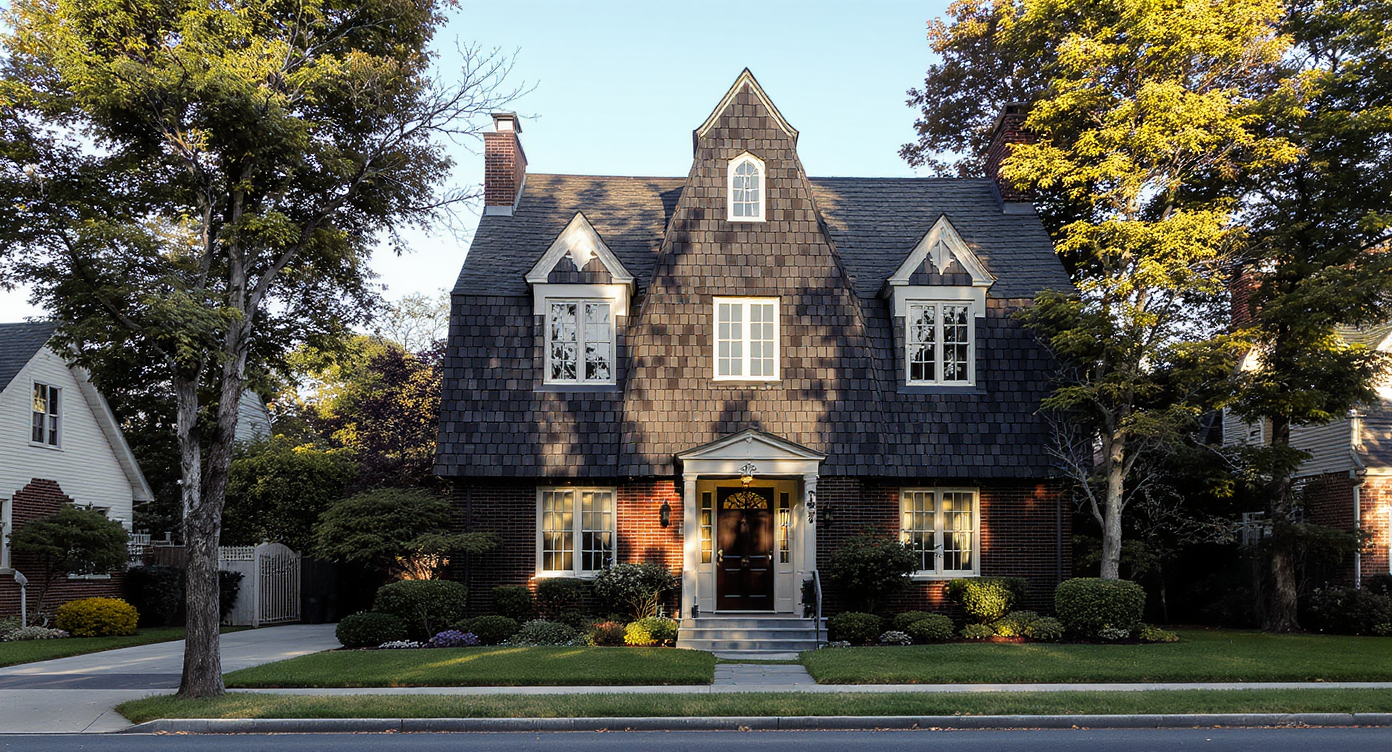
A mansard roof is a four-sided roof with two distinct slopes on every side — a near-vertical lower slope that wraps the upper story walls, and a nearly flat upper slope hidden behind it. The term comes from 17th-century French architect François Mansart, who popularized the design, and Britannica's definition describes it simply: "a type of roof having two slopes on every side, the lower slope being considerably steeper than the upper." If you've seen a boxy Victorian-era building with dormers punching through dramatically steep upper walls, you've seen a mansard roof.
How a Mansard Roof Is Structured
The defining feature is the double-slope geometry repeated on all four sides of the building. The lower slope is steep — often 70 to 80 degrees from horizontal — and covered in shingles or slate visible from the street. The upper slope is nearly level, typically only 3 to 5 degrees, and completely hidden behind the vertical lower section when viewed from ground level.
Dormer windows are standard on mansard roofs, punching through the steep lower slope to bring light and ventilation into the floor created by the design. That's the practical upside: because the steep walls act as full-height exterior walls, the space inside a mansard's upper story is far more usable than a conventional attic. You gain headroom across most of the floor rather than just at the ridge.
In cross section, a mansard can look similar to a gambrel (the classic barn roof), but gambrels only have two sloped sides. A mansard wraps all four sides, producing the symmetrical, boxy silhouette that defines the Second Empire architectural style popular in the United States from roughly 1855 to 1885.
Pros and Cons for Homeowners
What works in its favor:
- Usable upper-story space. The steep lower walls create headroom throughout the upper floor, making it genuinely livable — not just crawl-space storage.
- Distinctive curb appeal. Mansard roofs are uncommon enough to stand out. If architectural character matters, nothing reads "historic" quite like it.
- Dormer flexibility. Dormers punched into the steep slope add light options across the full perimeter of the upper floor.
Where it falls short:
- Complex installation. Multiple pitch angles, four steep sides, and integrated dormers require precision framing and a roofing crew experienced with the style. Fewer contractors specialize in this work.
- Cost. The complexity drives up both installation and repair costs significantly compared to a simple gable or hip roof of the same footprint.
- The flat upper deck is a liability. The nearly level upper portion doesn't drain as aggressively as a steep slope. Debris accumulates, water lingers, and if flashing fails — which it does on aging roofs — that hidden deck leaks directly into the living space below.
What Amarillo Homeowners Should Know
Mansard roofs are rare in the Texas Panhandle, and there are practical reasons for that. Amarillo averages 8 to 12 hailstorms per year, with 131 recorded hail events since 2000 and a documented maximum of 4.25 inches (softball-sized hail in May 2019). The Texas Panhandle also averages 14.3 mph sustained winds.
A steep lower slope sheds water fine, but the nearly flat upper deck is poorly suited to that kind of weather exposure. Hail impact on a low-slope surface is more damaging than on a steep slope — the stone hits more squarely rather than glancing off. Debris piles up, drainage is marginal, and standing water accelerates membrane or flashing failures.
If you own a historic property in Amarillo with a mansard roof, the key maintenance priorities are the upper deck membrane and flashing details around every dormer. After any significant hail event, get those areas inspected — they're the first to fail and the last to get noticed because they're invisible from the ground.
Own a property with a mansard or other unusual roof style? The 5 Star team has been working roofs across the Texas Panhandle for 11 years. Call us at (806) 622-6041 or visit our residential roofing page to schedule a free inspection. If a full replacement is in the picture, our roof replacement services cover all roof types.
Frequently Asked Questions
What makes a mansard roof different from a gambrel roof?
Both have two slopes, but a gambrel is only two-sided — like a barn roof. A mansard wraps all four sides of the building with its double slope, giving it a more boxy, symmetrical silhouette from every angle.
Are mansard roofs more expensive to replace?
Yes. The complex geometry — multiple pitch angles, four steep slopes, and dormers — means more labor, more material cuts, and fewer roofers who specialize in them. Expect to pay considerably more than a comparable simple gable replacement.
Can a mansard roof handle Texas Panhandle hail?
The steep lower slope handles water runoff well, but the nearly flat upper deck is vulnerable — hail impact, standing water, and debris accumulation are real concerns. Regular inspections after storm events are essential.
Why does the upper slope of a mansard look flat?
The upper portion is typically pitched at only 3-5 degrees — nearly level. It sits hidden behind the parapet formed by the steep lower slope and is not visible from street level. This hidden deck is where leaks most commonly originate.
Is a mansard roof a good choice for new construction in Amarillo?
It's unusual for new residential construction here. The style is historically associated with Second Empire architecture from the 1860s–1880s, and the flat upper deck is a poor fit for Amarillo's high hail frequency and 14+ mph average winds. Most Amarillo homeowners stick with gable or hip roofs for good reason.
Need a roof inspection?
Free, no-pressure roof inspections from a locally owned Amarillo company. We'll walk you through exactly what we find — with photos.