How Much Does TPO Roofing Cost in Amarillo?
TPO commercial roofing cost depends on membrane thickness, attachment method, and roof size, not a flat per-sqft price. What drives cost for Amarillo buildings.
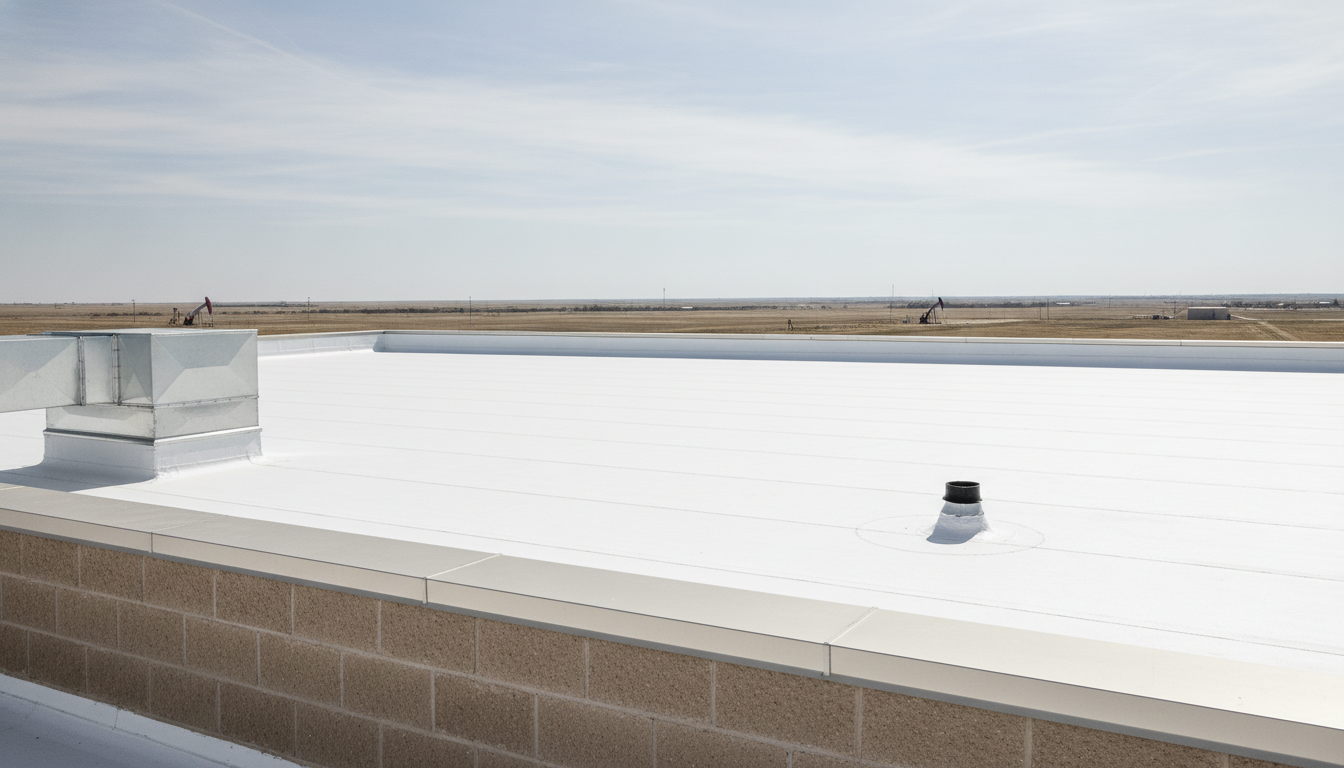
TPO roofing cost for a commercial building comes down to four variables: membrane thickness, attachment method, roof size, and deck condition — not a flat per-square-foot number you can plug into a calculator. There's no single "TPO costs $X" answer that holds up across different buildings, which is why two contractors can quote the same roof thousands of dollars apart. If you're a property manager or building owner in Amarillo trying to budget for a TPO replacement or new install, understanding what actually drives the price gets you a lot further than a generic estimate.
What Actually Changes the Price
TPO membrane comes in a few standard thicknesses — most commonly 45, 60, and 80 mil. GAF's EverGuard TPO product line is a good reference point: thicker membrane costs more upfront but carries a longer manufacturer warranty, running from 20 years on 45 mil membrane up to 30 years on 80 mil. Fleece-backed versions cost more than smooth membrane but resist punctures better, which matters more than people expect once hail enters the picture.
Attachment method is the second big lever. Mechanically attached systems (membrane fastened through insulation into the deck) are typically the least expensive to install. Fully adhered systems, where membrane is glued down across the whole surface, cost more in labor but perform better in high-wind conditions and hold up better over time. Ballasted systems — membrane held down with stone or pavers instead of fasteners or adhesive — are less common on commercial buildings with rooftop equipment because the ballast gets in the way of maintenance access.
Roof size matters too, but not in a straight line. A small roof with a lot of HVAC units, skylights, and roof penetrations costs more per square foot than a large, open roof, because every penetration needs flashing and detail work. Contractors price complexity, not just square footage.
Insulation is the piece building owners forget to budget for. Most commercial re-roofs require adding or upgrading rigid insulation board to meet current energy code, and the thickness required depends on your building's climate zone and existing R-value. That insulation layer sits under the membrane and gets priced separately from the TPO itself — it's a real line item, not an add-on, and it's one of the more common reasons a quote comes in higher than a building owner expected going in.
Recover vs. Full Tear-Off
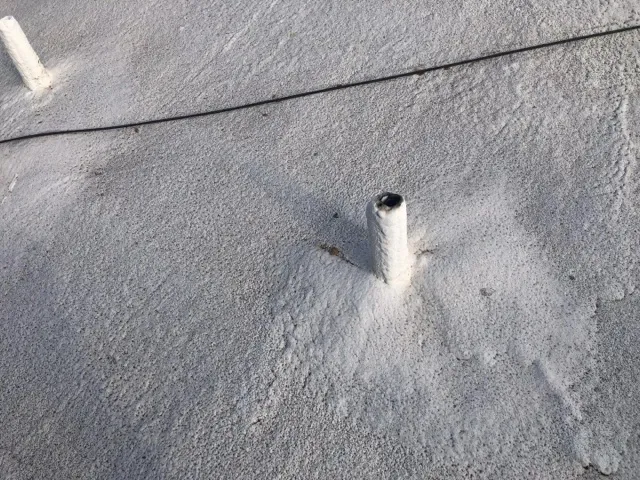
If your existing roof is in reasonably good shape — dry deck, no structural sag, no more than one existing layer — a recover (installing new TPO over the old roof) usually costs less than a full tear-off. If the deck is wet, rotted, or already has multiple layers, code and practicality both push you toward tear-off. A contractor needs to get on the roof and check the deck before quoting either option honestly; anyone who prices a recover-vs-tear-off decision from photos or a drive-by isn't giving you a real number.
Insurance-Grade vs. Retail Pricing
Worth knowing before you start collecting quotes: insurance-scoped (Xactimate) pricing and retail cash-bid pricing aren't the same thing, even for the same job. Insurance scopes itemize every line — tear-off, underlayment, flashing, ventilation — with overhead and profit applied on qualifying claims. Retail cash bids often bundle those same items and can come in lower on paper without necessarily being a worse job. If you're comparing a quote from an insurance claim against a straight cash quote, make sure you're comparing the same scope of work, not just the bottom-line number.
Amarillo-Specific Considerations
Potter County sits in what's sometimes called Hail Alley, where dry high-plains air meets Gulf moisture and produces frequent severe hailstorms — the Panhandle has logged 131 hail days since 2000 and typically sees 8 to 12 hailstorms a year. That history matters for TPO specifically, because thinner membrane is more vulnerable to hail bruising and puncture than thicker fleece-backed options. If your building has been hit before, or you're budgeting for the next 20 years of ownership, it's worth scheduling a roof inspection before storm season and discussing membrane thickness with your contractor rather than defaulting to the cheapest option.
If you do file an insurance claim for storm-related roof damage, Texas's Prompt Payment Act requires insurers to acknowledge your claim within 15 days and pay or deny it within 60, with 18% annual interest owed on payments that are delayed past that window. You have a two-year window from the date of loss to file.
Ready for a real number on your building? Call (806) 622-6041 or visit our commercial roofing page to schedule a free inspection — we'll walk the roof, check the deck, and give you an itemized quote instead of a per-square-foot guess.
Frequently Asked Questions
Is TPO cheaper than a standing seam metal roof for a commercial building?
Usually, yes, on a per-square-foot basis for the membrane and installation itself. Standing seam metal runs roughly $13-$18 per square foot installed in the Amarillo market, while single-ply membranes like TPO are generally less expensive to install because there's no panel seaming or metal fabrication labor involved. Get quotes on both before deciding — insulation requirements and roof size affect the comparison.
How long does a TPO roof last in the Texas Panhandle?
Most TPO systems carry manufacturer warranties of 20 to 30 years depending on membrane thickness, with GAF's EverGuard line offering 20-year coverage on 45 mil membrane up to 30-year coverage on 80 mil. Actual service life depends on installation quality, ponding water, and how well the roof is maintained after hailstorms.
Does hail damage TPO roofing?
TPO membrane can be punctured or bruised by large hail, and Amarillo sees some of the most frequent hail activity in the country. Thicker membrane (60 or 80 mil) and fleece-backed options resist impact better than thinner 45 mil membrane. A post-storm inspection is worth scheduling even if damage isn't visible from the ground.
Should I recover my existing roof or tear it off before installing TPO?
It depends on the condition of your current roof and local code. A recover (installing TPO over existing roofing) costs less than a full tear-off, but it only works if the existing substrate is dry, structurally sound, and code allows it. A contractor needs to inspect the deck before recommending either option.
Why do commercial roofing quotes vary so much for the same building?
Membrane thickness, attachment method (mechanically attached, fully adhered, or ballasted), insulation requirements, deck condition, and number of roof penetrations all change the price. Two quotes for the same roof can differ by thousands of dollars because contractors are scoping different specs. Ask for an itemized breakdown so you're comparing apples to apples.
Related Guides
Need a roof inspection in Amarillo?
Free, no-pressure roof inspections from a locally owned Amarillo company. We'll walk you through exactly what we find — with photos.