5 Star Residential and Commercial Roofing
TPO Roofing in West Texas

Quick Summary
5 Star Roofing installs TPO roofing systems across the Texas Panhandle and Permian Basin — energy-efficient, heat-reflective single-ply membranes for commercial and industrial buildings.
TPO Roofing Installation and Repair Across West Texas
Why Is TPO the Smart Flat Roof Choice for Texas Heat?
TPO (Thermoplastic Polyolefin) is the fastest-growing commercial roofing membrane in Texas for good reason. Its white reflective surface cuts cooling costs, its heat-welded seams resist the Panhandle's relentless winds, and its price point works for businesses of every size. 5 Star Roofing installs, repairs, and maintains TPO systems across our 14-city service area.
Commercial roof systems we install








Manufacturer logos are trademarks of their respective owners. 5 Star Commercial Roofing is independent and is not affiliated with or endorsed by any listed manufacturer.
What Is TPO Roofing?
TPO is a single-ply roofing membrane made from thermoplastic polyolefin, a blend of polypropylene and ethylene-propylene rubber. It comes in large rolls that are mechanically fastened or fully adhered to the roof deck, then joined at the seams with a hot-air welding gun. This heat-welding process fuses the overlapping membrane edges into a continuous, watertight bond that is actually stronger than the membrane itself.
Single-Ply Simplicity
Unlike multi-layer built-up roofing (BUR), TPO installs as a single membrane layer over insulation. This means faster installation times, lower labor costs, and a lighter load on your building's structure. A typical 10,000 square foot TPO installation takes 3-5 days.
Heat-Welded Seam Strength
Hot-air welding creates a molecular bond between overlapping TPO sheets, producing seams that withstand more stress than the membrane material itself. Unlike adhesive or tape seams used on EPDM systems, heat-welded TPO seams do not degrade over time from UV exposure or temperature cycling.
What Are the Benefits of TPO Roofing in West Texas?
TPO is particularly well-suited to the Texas climate. Here is why so many building owners in the Panhandle and Permian Basin are choosing it:
Energy Efficiency
White TPO membranes reflect up to 85% of solar radiation, significantly reducing heat absorption through the roof. In a region where summer temperatures routinely exceed 100 degrees, this translates to 20-30% lower cooling costs compared to dark-surfaced roofing systems.
Chemical Resistance
TPO resists oils, grease, and many industrial chemicals that degrade EPDM and asphalt-based membranes. That makes it a strong fit for restaurants along I-40, manufacturing buildings in Amarillo's warehouse corridor, and auto and oilfield service shops across the Permian Basin where rooftop HVAC units and exhaust fans drop residue onto the membrane year-round.
Lightweight Installation
TPO weighs approximately 0.5 pounds per square foot, far lighter than built-up roofing at 2-4 pounds per square foot. This reduces structural stress, simplifies installation, and is easier to work with on re-roofing projects over existing systems.
Cost-Effective vs. PVC
TPO delivers performance comparable to PVC roofing at approximately 15-25% lower installed cost. For most commercial applications in West Texas, TPO provides the optimal balance of durability, energy efficiency, and budget considerations.
15-30 Year Lifespan
With proper installation and annual maintenance, TPO roofs consistently deliver 15-30 years of service. The 80-mil membranes we recommend for West Texas buildings trend toward the upper end of that range with regular inspections.
Wind Resistance
Mechanically attached TPO systems with heat-welded seams handle the sustained high winds common to the Texas Panhandle. Properly installed TPO withstands wind uplift pressures well beyond what most conventional roofing systems can resist.
How Does TPO Compare to Other Flat Roof Systems?
Choosing the right flat roof system depends on your building, budget, and priorities. Here is how TPO compares to the other major options:
| Feature | TPO | EPDM | PVC | Built-Up (BUR) |
|---|---|---|---|---|
| Cost/sq ft | $5-$8 | $4-$7 | $6-$10 | $5-$9 |
| Lifespan | 15-30 yr | 15-25 yr | 20-30 yr | 20-30 yr |
| Energy Efficiency | Excellent (white) | Poor (black) | Excellent (white) | Fair (gravel) |
| Seam Strength | Heat-welded | Adhesive/tape | Heat-welded | Layered |
| Chemical Resistance | Good | Fair | Excellent | Fair |
| Best For | Most commercial | Budget projects | Chemical exposure | High-traffic roofs |
For most commercial buildings in the Panhandle and Permian Basin, TPO provides the best combination of energy savings, wind resistance, and installed cost. PVC is the better choice when chemical exposure from grease vents or industrial exhaust is a primary concern. Learn more about all our commercial roofing options.
How Do You Maintain and Repair a TPO Roof?
Regular maintenance extends your TPO roof's lifespan and prevents small issues from becoming expensive problems. Here is what ongoing TPO care involves:
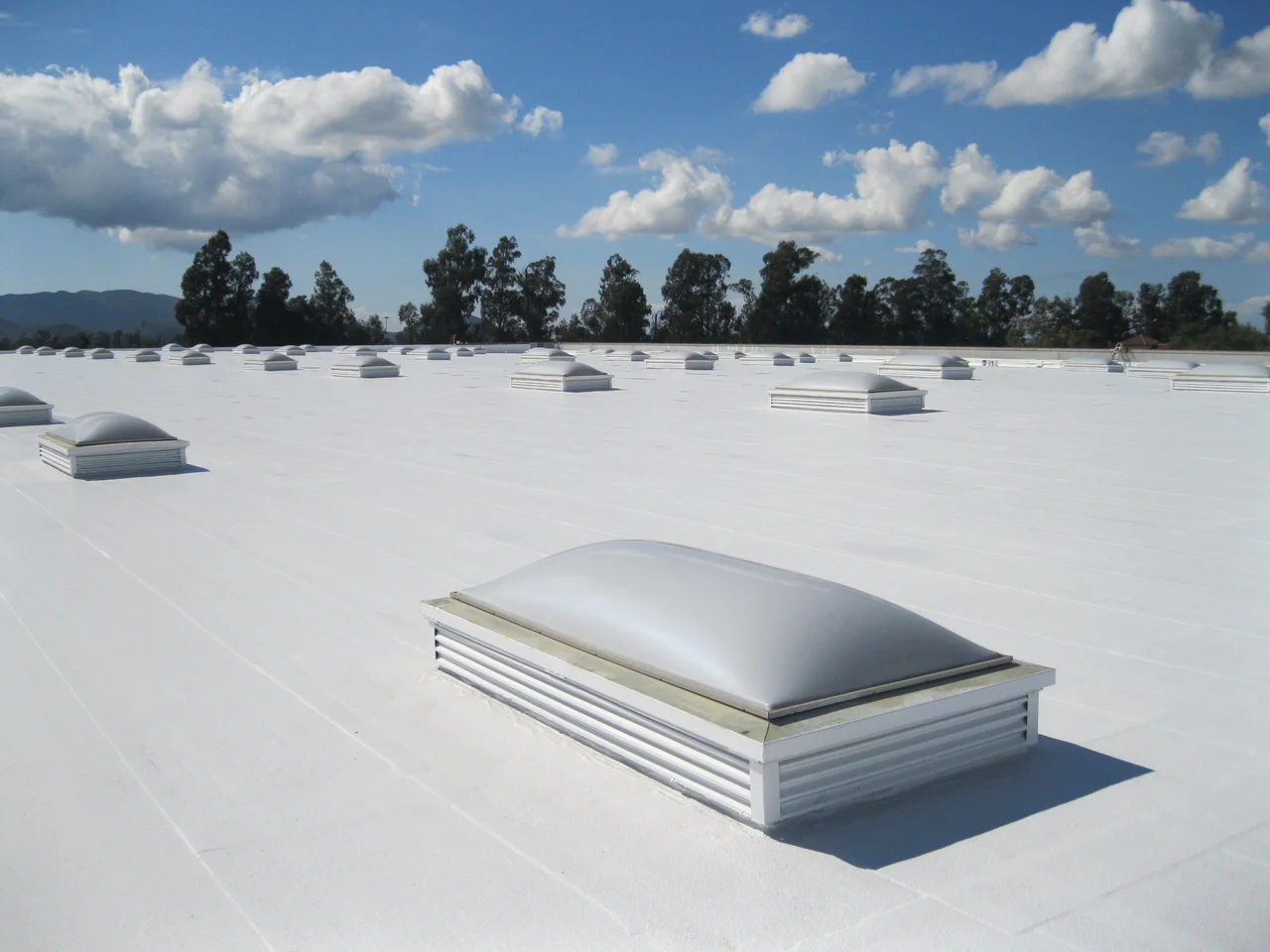
Seam Inspection
Heat-welded seams are TPO's strongest feature, but Panhandle UV and 25-45 mph sustained winds put steady stress on edge seams and flashing terminations. We inspect every linear foot of seam annually for separation, fish-mouthing, and wear, with extra attention around HVAC curbs, plumbing vents, and roof drains where most failures start.
Membrane Patching
Punctures from foot traffic on HVAC service calls, dropped tools, or Texas Panhandle hail are repaired by heat-welding a matching TPO patch from manufacturers like Carlisle or Firestone over the damaged area. The patch restores the original waterproof bond and on small areas can be completed in under an hour without taking the building offline.
Drain Maintenance
Standing water is the enemy of any flat TPO roof, especially across the Amarillo, Lubbock, and Midland-Odessa warehouse corridors where wind-driven caliche and grain dust pack into roof drains. We clear drains, scuppers, and parapet scuppers, verify slope is still draining toward the right points, and check that drain boots and membrane terminations remain bonded.
Coating Options
As TPO membranes age past 15 years, applying a reflective roof coating can extend their service life by 5-10 additional years at a fraction of the cost of full replacement. Coatings also renew the reflective properties that diminish over time.
TPO Roofing by City
We install and service TPO roofing systems across 14 Texas cities. Select your location for city-specific information and scheduling:
Frequently Asked Questions
How long does a TPO roof last?
A properly installed TPO roof typically lasts 15-30 years depending on membrane thickness, installation quality, and maintenance. In West Texas, UV exposure and temperature extremes can shorten lifespan at the lower end if maintenance is neglected. Choosing an 80-mil membrane and scheduling annual inspections extends your roof toward the upper range of that estimate.
What is the difference between TPO and EPDM roofing?
TPO is a white thermoplastic membrane with heat-welded seams, while EPDM is a black rubber membrane with adhesive or tape seams. TPO reflects solar heat and reduces cooling costs, making it a better fit for hot Texas climates. EPDM absorbs heat but is slightly less expensive upfront. TPO seams are stronger because heat welding creates a molecular bond, whereas EPDM seams rely on adhesive that can degrade over time.
Is TPO roofing good for the West Texas climate?
TPO is one of the best flat roof options for West Texas. Its white reflective surface can reduce cooling costs by 20-30% during summer months when temperatures regularly exceed 100 degrees. TPO also resists UV degradation, handles temperature cycling between extreme heat and occasional freezing, and its heat-welded seams stand up to the high winds common in the Panhandle and Permian Basin.
How much does TPO roofing cost per square foot?
TPO roofing typically costs $5-$8 per square foot installed, depending on membrane thickness (45-mil, 60-mil, or 80-mil), insulation requirements, and roof complexity. A 10,000 square foot commercial building would range from $50,000 to $80,000 for a complete TPO installation. This is generally 15-25% less expensive than PVC while providing comparable performance in most applications.
Can a TPO roof be repaired or does it need full replacement?
TPO roofs can absolutely be repaired. Small punctures, tears, and seam failures are fixed by heat-welding patches of matching TPO membrane over the damaged area. If damage covers less than 25% of the roof surface and the membrane is not at the end of its lifespan, repair is almost always more cost-effective than replacement. We inspect the full roof before recommending either option.
What thickness of TPO membrane should I choose?
For West Texas commercial buildings, we recommend 60-mil as the standard and 80-mil as the premium choice. 45-mil TPO is available but is thinner and more susceptible to punctures and UV degradation over time. The 80-mil membrane adds roughly $0.50-$1.00 per square foot to the project cost but provides measurably longer lifespan and better resistance to hail impact and foot traffic.
Does TPO roofing qualify for energy efficiency tax credits?
TPO roofing may qualify for energy efficiency incentives depending on the specific product and installation. White TPO membranes that meet ENERGY STAR and Cool Roof Rating Council standards can contribute to energy savings that factor into commercial building efficiency programs. Consult your tax advisor for current federal and Texas-specific incentives, as programs and eligibility criteria change periodically.
Get a Free TPO Roofing Estimate
Whether you need a new TPO installation, repair, or a second opinion on your current flat roof, 5 Star Roofing provides free inspections and transparent estimates.